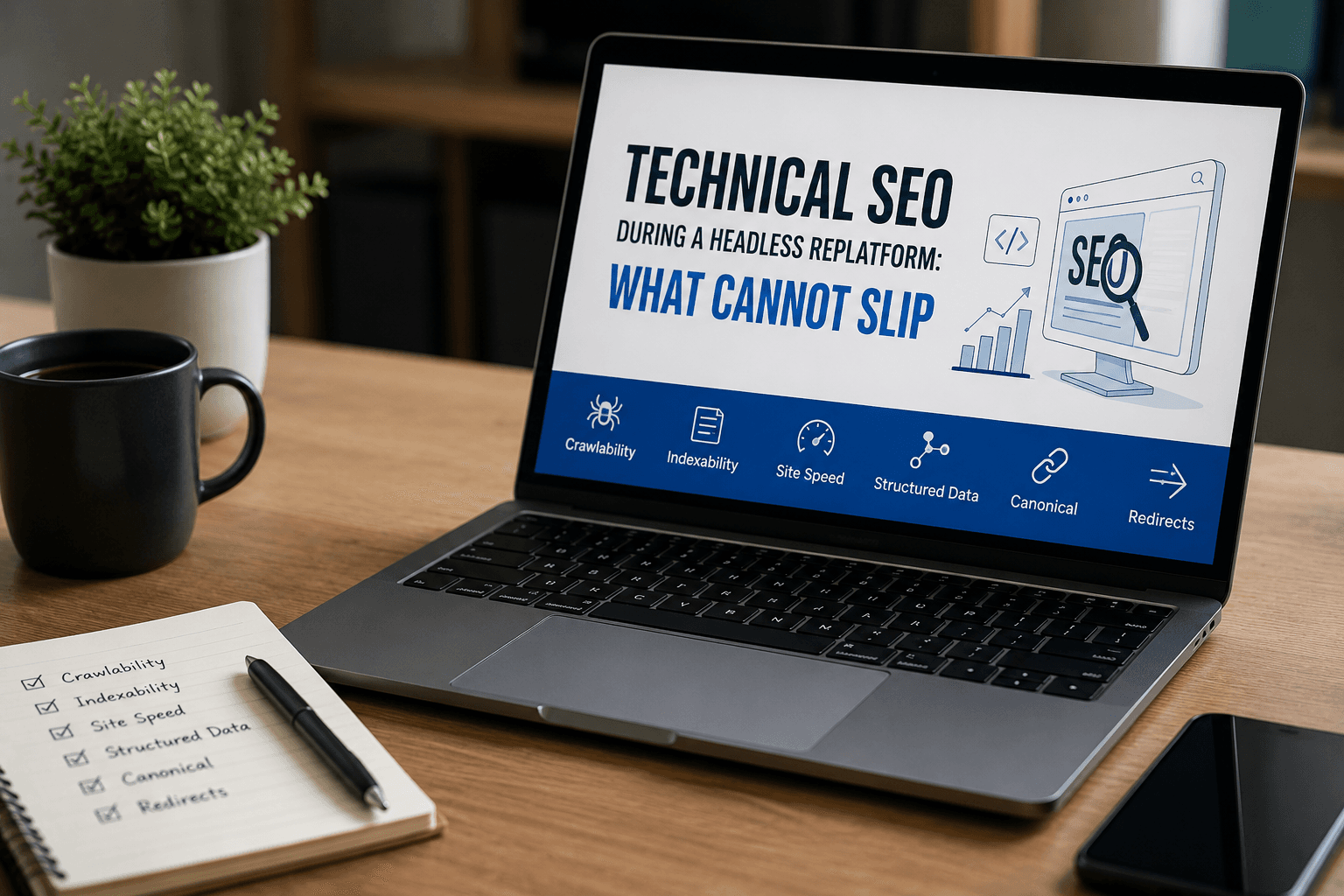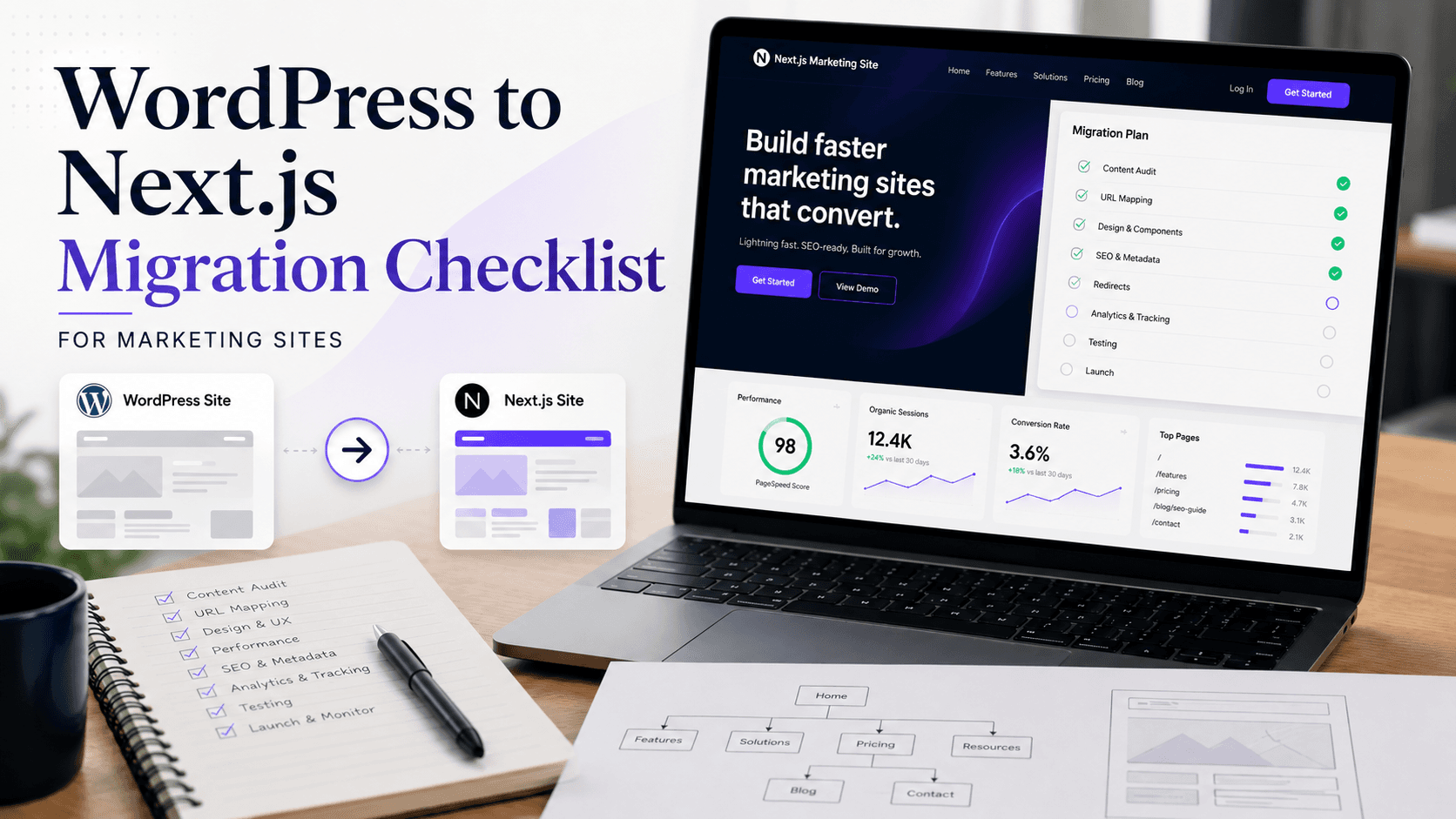
Teams usually assume the redesign is the risky part. It is not. The real risk sits in the content model, URL inventory, redirect coverage, and the parts of the site nobody remembers until launch week.
01
Start with an inventory, not a redesign
Before changing a single component, capture what exists today. That baseline lets you rebuild deliberately instead of discovering broken pages after launch.
Export every indexable URL, template type, and status code.
List forms, calculators, gated assets, embeds, and search pages.
Document metadata, schema, canonicals, hreflang, and internal linking patterns.
Flag pages that drive leads, links, or high-converting traffic.
02
Model content around publishing jobs
A headless CMS should match how the team publishes, not just mirror the old WordPress database. Repeating old content debt inside a new stack wastes the migration.
- Separate pages, landing pages, reusable modules, and blog posts into clear content types.
- Define which fields are editorial and which stay code-owned.
- Keep slug rules and SEO fields explicit so migrations stay predictable.
03
Treat redirects and analytics as launch blockers
Most post-launch ranking loss comes from redirect gaps, broken tracking, or missing structured data. Those are operational issues, not design issues.
- Map legacy URLs to final destinations before content freeze.
- Verify GA4, Google Ads, Meta Pixel, and form events in staging.
- Compare schema output, titles, descriptions, and robots directives against production.